
Final SHIFT Pilot Held at the Homeland Museum of Knjaževac, Serbia
The fourth and final pilot of the SHIFT project was successfully held on July 30th at the Homeland Museum in Knjaževac, Serbia, a member of the Balkan Museum Network. The event brought together 30 participants from diverse stakeholder groups, including persons with disabilities (blind, visually impaired, individuals with intellectual and physical disabilities), IT professionals, academics, […]
Expanding Inclusion and Innovation at the Homeland Museum of Knjaževac with New Technology
As part of the SHIFT project supported by the Horizon Europe programme, the Homeland Museum of Knjaževac is taking a bold step into the future of cultural accessibility and inclusion. The recentacquisition of cutting-edge technology—including a 3D printer, 3D scanner, 3D cutter, Oculus Quest3S, iPad, and additional memory for storing data on the museum’s servers […]
Join us in discussing monetization and costs of digital assets in GLAMS
We kindly invite you to participate in the next webinar on 10 April 2025 at 14 CET (online). This webinar explores the importance of digital assets in GLAMs (Galleries, Libraries, Archives, and Museums), focusing on their financial management, funding strategies, and cost optimization. It examines how institutions can balance their cultural mission with financial sustainability […]
Webinar: Experiencing cultural heritage through virtual time travel
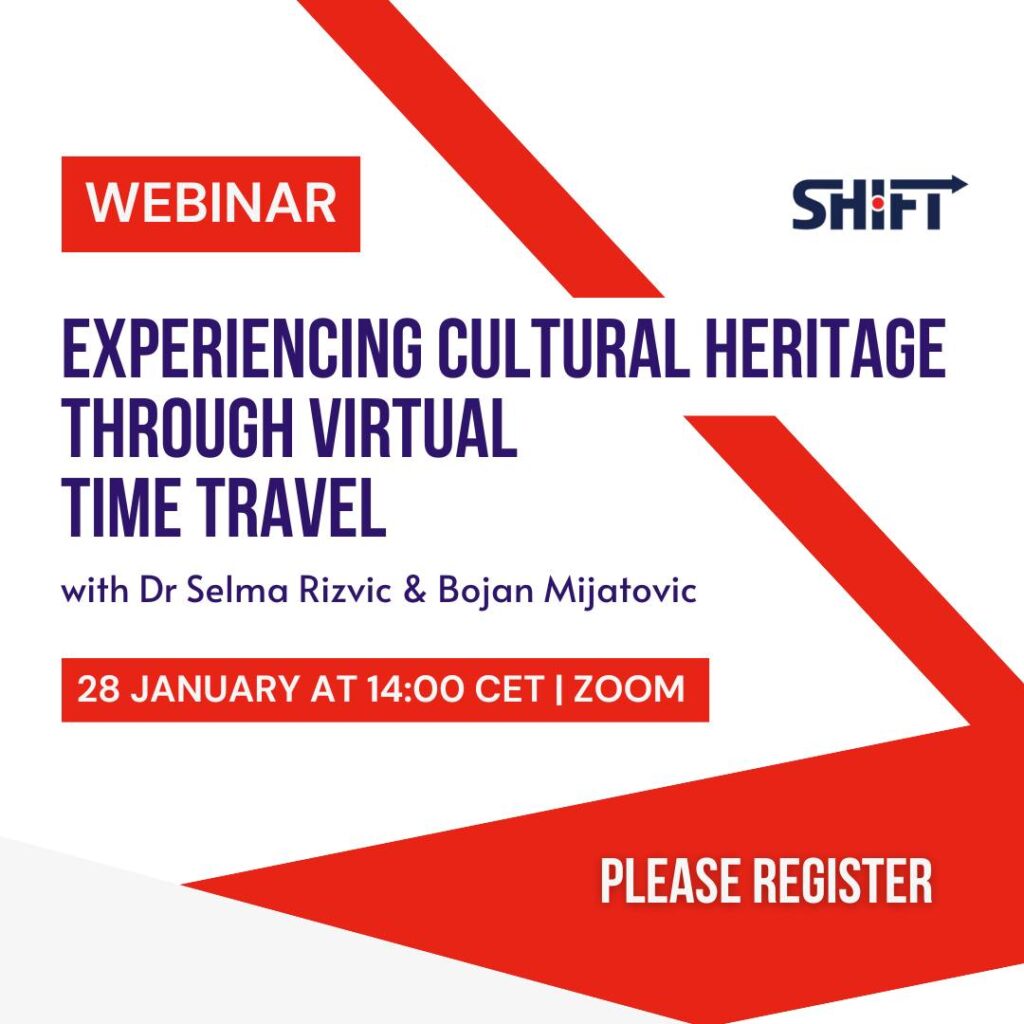
Join us for an engaging webinar on 28 January 2025 at 14 CET (online) exploring the intersection of digital technology and cultural heritage! Discover how VR and AR enhance the presentation of cultural heritage, improve accessibility for persons with disabilities in museums, and create immersive experiences like a virtual leap from Mostar’s Old Bridge. Additionally, […]
Workshops organised by the Balkan Museum Network and the Homeland Museum of Knjazevac
In the scope of the SHIFT project, supported through the Horizon 2020 programme, the Balkan Museum Network, as a project partner, and the Homeland Museum of Knjaževac, as a use case provider, organized workshops and conducted interviews with three blind people, representatives of one of the project’s target groups: