Objectives
The objective of this pilot was to evaluate the use of SHIFT’s haptic interaction technologies to enhance accessibility for people with visual and hearing impairments in a museum context. By integrating haptic feedback and multisensory tools, the pilot sought to demonstrate how CH artefacts could be made more tangible and inclusive, bridging gaps in visitor experience for disabled communities.
User group involved: The pilot engaged disability groups in Budapest, specifically members of associations representing people with visual and hearing impairments. These groups were invited to participate in the testing sessions, providing first-hand feedback on usability, accessibility, and the experiential value of SHIFT’s haptic technologies. Museum professionals were also involved to assess integration into exhibition workflows.
Tools tested: The following SHIFT tools were deployed during this pilot:
Demonstration activity
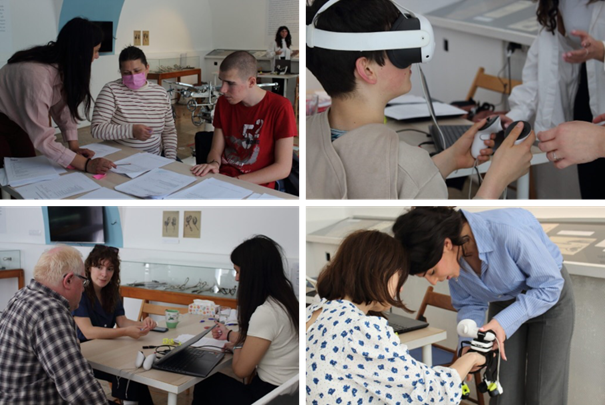
The pilot demonstration took place at the Semmelweis Medical History Museum (SOM) in Budapest, where disability groups tested SHIFT haptic gloves and audio-based accessibility tools in a controlled museum environment. Participants were guided through tactile exploration of cultural artefacts and paintings, supported by TTS narration and soundscapes. Feedback was collected through interviews and focus group discussions, highlighting the value of combining haptic and auditory modalities for accessibility. The activity underscored the importance of co-design with disability communities, generating critical insights into device comfort, navigation clarity, and integration of multimodal cues. The demonstration of the pilot activities is presented in Figure 2.